
Before You Remodel: A California Home Insurance Checklist
Planning a remodel in California? Check dwelling limits, construction coverage, contractor insurance, liability, and occupancy changes before work starts.
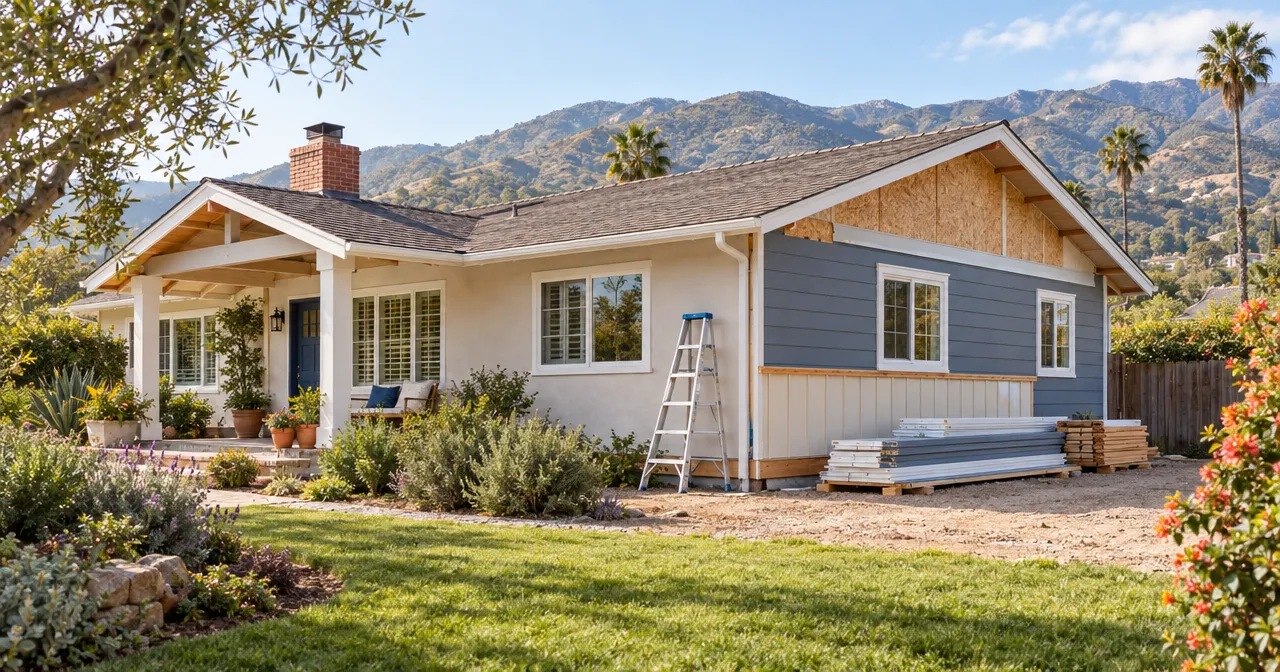
A kitchen renovation in Glendora may start with cabinets and tile, but it can change more than the floor plan. Materials sit on-site, workers come and go, and the cost to rebuild the finished house may no longer match the figure on last year’s insurance declarations page. For a larger project, you might even move out while work is underway.
That does not mean every project needs a new policy. It means the right question is not simply, “Do I have homeowners insurance?” It is, “How does my coverage work during construction and after the finished home changes?” Whether you are adding a room in Glendora, renovating an older house in Anaheim, or building a backyard ADU in Riverside, the conversation is worth having before demolition begins.
Here is a practical sequence for that conversation with your agent and contractor. Policy terms and underwriting decisions vary by insurer, so use the checklist to identify questions—not as a promise that a particular loss is covered.
Start with the scope, schedule, and occupancy
Describe the work in ordinary language: a cosmetic refresh, a roof replacement, a structural addition, a detached garage conversion, or a new accessory dwelling unit (ADU). Give your agent the estimated start and completion dates, contract value, whether a licensed general contractor will supervise the job, and whether anyone will live in the house throughout the work. Mention any periods without working plumbing, power, or a functional kitchen. If a contractor or permit plan changes, update the conversation.
A small paint job and a months-long renovation that opens an exterior wall are different risks. Some existing homeowners policies may respond to certain losses during modest work, but you should not assume the policy treats a major remodel the same way. Travelers’ overview of homeowners insurance and renovations recommends reviewing the policy and contacting an agent before work begins, particularly for additions and significant upgrades.
Ask for a clear answer in writing: Will the insurer continue the current homeowners policy during this project? Are there construction-related conditions or exclusions? Must the carrier approve the work or issue an endorsement before a given date? Is there a required inspection? Save the reply with your contract and policy documents. An agent can help coordinate those questions with the insurer; the insurer’s policy and written decisions control coverage.
If your family moves out temporarily
Tell your agent whether the home will be unoccupied and for how long. A home you leave for a weekend is not necessarily treated like a property left empty for months. The California Department of Insurance (CDI) residential insurance guide warns that losses to long-vacant houses can be excluded under typical homeowners coverage; the actual wording and timing in your policy matter. Ask specifically about theft, vandalism, water leaks, and any monitoring or security requirements during the absence.
Also distinguish planned relocation for construction from loss of use after a covered loss. Loss-of-use or additional-living-expense coverage generally addresses extra costs when an insured event makes a home unlivable; it is not a budget for the hotel you chose during a scheduled remodel. If you need temporary housing, plan for it separately unless the insurer confirms otherwise for a specific situation.
Recalculate what it would cost to rebuild
Your dwelling limit should reflect the cost to repair or rebuild the house using comparable materials and labor—not its sale price, the mortgage balance, or the renovation invoice. CDI advises homeowners to document modifications and review the dwelling limit with an agent when changes affect replacement cost. A $100,000 remodel does not necessarily mean adding exactly $100,000 to the limit: some spending replaces existing finishes, while an addition creates new square footage. An updated rebuild estimate is more useful than adding the contractor’s quote to your old limit.
Give your agent the plans or a concise description of added square footage and materials. Consider custom cabinetry, higher-grade finishes, solar equipment, built-ins, and an attached or detached structure. Ask whether the other structures limit is enough for a detached garage or ADU; it is separate from the main dwelling limit. If the project changes an existing detached structure into living space, clarify how it will be classified and insured after completion.
Next, look at the endorsements, not just the total on the declarations page. Extended or limited replacement-cost coverage can add a specified amount above a dwelling limit under its terms, but it does not replace an accurate starting estimate. Ordinance-or-law coverage may address extra expense to meet current building codes after a covered loss if the policy includes it. Ask whether any separate wildfire, roof, water, or other deductible applies, and what you would pay out of pocket for a covered claim. CDI’s guide explains that replacement-cost policies and building-code coverage vary, so compare the actual wording rather than relying on the label “replacement cost.”
Example: If your existing declarations page lists a $600,000 dwelling limit and an addition changes the materials and square footage, an automatic inflation adjustment may not reflect the finished house. Ask for a new reconstruction estimate based on the plans and local labor costs in Los Angeles County. Review the resulting premium and deductible alongside the updated limit; do not wait for the next annual renewal.
Clarify who protects the work and materials
A half-finished addition, cabinets waiting in the garage, and fixtures in transit raise a practical question: who has coverage for the project before it becomes part of the finished home? A contractor’s liability insurance is not the same as property insurance for your building and stored materials. For larger renovations, ask whether a builders’ risk or course-of-construction policy is appropriate, whether the owner or contractor should obtain it, what property it covers, and when that coverage starts and ends. Insurer-specific terms can differ for the existing structure, new work, materials in storage, and materials in transit. Travelers’ description of builders’ risk coverage illustrates why those categories should be checked explicitly.
Do not assume “the contractor has insurance” settles ownership of every loss. Request copies of relevant certificates and have your agent review the contract’s insurance requirements. Ask: Is the existing house included under the construction policy or only the addition? Who covers materials bought directly by the homeowner? What is excluded for theft, water intrusion, faulty workmanship, or an earthquake? Some risks may require separate coverage, while defects or poor work may not be covered by property insurance at all. Get the project-specific answer before paying for substantial materials.
Keep a simple file of dated photos, plans, permits, receipts, serial numbers for major equipment, and completion documents. Photos before walls are opened and after the work is finished can also help update the replacement-cost estimate and home inventory.
Check the contractor—and your own liability limits
Construction increases the number of people and potential hazards on the premises. Before signing, use the California Contractors State License Board (CSLB) guidance on hiring a contractor to verify the license and request evidence of commercial general liability and workers’ compensation coverage. Check the status and dates rather than accepting an old certificate. Find out who is hiring and insuring subcontractors; the general contractor’s paperwork may not automatically answer that question for every worker.
CSLB notes that California contractors with employees are generally required to carry workers’ compensation, and warns that an uninsured worker’s injury could expose a homeowner to financial responsibility. Do not assume your homeowners liability coverage will take the contractor’s place. If you plan to pull the permit as an owner-builder, understand that you take on substantial responsibility for the project and may face employer obligations depending on how you hire workers. CSLB explains owner-builder risks; get legal and insurance guidance for your specific arrangement before choosing that route.
Then review your own liability portfolio. The personal liability limit on the homeowners policy and the liability limit on your auto policy are separate underlying protections. A personal umbrella policy can add another layer over eligible underlying policies, but it usually has minimum limits and conditions of its own; it does not automatically cover a contractor’s obligations or every construction exposure. If you have a boat, RV, motorcycle, or other recreational vehicle, ask whether it belongs in the umbrella review. If you use a vehicle for a contracting or other business operation, discuss commercial auto instead of assuming a personal auto-and-umbrella combination fits.
Do not overlook the coverages a remodel does not create
Renovating in Southern California can be a good time to review hazards outside the standard homeowners policy. Earthquake damage is generally excluded from homeowners coverage; earthquake insurance is a separate purchase with its own limits and deductibles. If a remodel changes the dwelling limit, ask how that affects any earthquake policy and what its deductible would mean in dollars. CDI’s earthquake insurance guide explains the distinction and the main coverage parts.
The same review can catch smaller but meaningful gaps. If you move furniture, electronics, or jewelry into storage while the work proceeds, ask how the policy covers property away from home and whether theft limits or storage restrictions apply. Jewelry and other valuables can have special limits; an itemized endorsement may be worth discussing. Device protection plans are different products with different covered incidents and deductibles, so compare them with homeowners coverage rather than assuming either duplicates the other. If a pet will stay elsewhere during the renovation, pet insurance addresses eligible veterinary costs, not damage to the building or pet boarding simply because you chose to renovate.
An ADU or converted room creates another fork in the road. Will a family member live there, will you rent it to a tenant, or will you use it as a home office? A rental may call for landlord or rental-property coverage and tenant renters insurance for the tenant’s belongings; a condominium project may require coordination with the HOA’s master policy and your condo policy. If you operate a business from the new space or welcome clients there, discuss business property, general liability, cyber liability, or other business insurance rather than presuming the personal homeowners policy covers professional activity. Those questions turn on actual use, not just a room’s name on the plans.
A three-stage review you can actually use
Before the first workday
- Send your agent the scope, schedule, plans, contractor details, and living arrangements; ask for written confirmation of any required insurer approval or policy changes.
- Confirm the dwelling and other-structures limits, deductibles, liability limits, and coverage for the existing building and construction materials.
- Verify the contractor’s license and current liability and workers’ compensation information. Decide who will arrange any builders’ risk coverage and the exact effective dates.
While the project is underway
- Tell your agent about material changes: longer vacancy, a larger addition, a newly planned pool, changes in contractor, or a switch from family use to rental use.
- Keep receipts and photos, and ask who is responsible for any newly purchased materials or equipment before installation.
At completion
- Share final square footage, finishes, permits, and occupancy with your agent. Request an updated rebuild estimate and declarations page, and check that temporary construction coverage ends at the right time.
- Revisit earthquake, umbrella, jewelry, and any landlord or small-business coverage affected by the finished space.
A remodel should leave you with a house that works better for your family—not an insurance portfolio still describing the old one. If you are planning work in Glendora or nearby communities such as Los Angeles, Long Beach, Santa Ana, or Irvine, call or message Saed Albasha Agency’s Glendora team for a personalized coverage review. We can help make the moving pieces simpler, clearer, and easier to manage. You can also request a personal insurance quote when you are ready.