
When Your Teen Starts Driving in California: A Family Insurance Review
A California teen driver changes more than the auto premium. Review household drivers, liability limits, car coverage, umbrella rules, and college moves together.
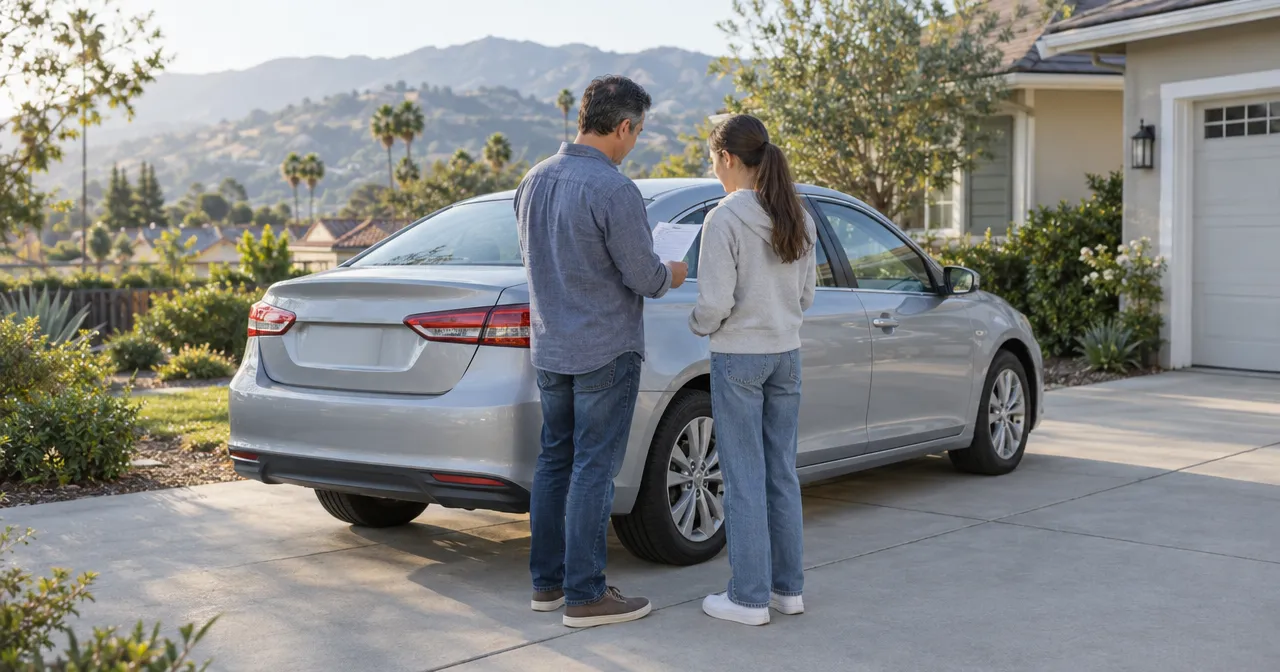
The first supervised trip around the neighborhood can feel like a small milestone. For a Glendora family, though, a teen’s permit also changes a practical question: does the insurance portfolio still describe who drives, which cars they use, and the liability the family wants to carry? It is easier to answer before a new driver takes the wheel than after a claim.
You do not necessarily need a separate policy for your teenager. You do need to tell your insurer about the new driver, confirm when the carrier requires them to be listed, and review what each part of the auto policy actually pays for. Homeowners and umbrella insurance belong in that conversation too. The details depend on your insurer, policy, vehicles, and household, so treat this as a set of questions to resolve with your agent rather than a promise of coverage.
Start the conversation at the permit, not the first solo drive
Some families assume the insurance discussion can wait until a teen passes the road test. That is risky as a planning habit. The California Department of Insurance’s guidance for young drivers notes that insurers may begin charging for a minor when a permit is issued, while others wait until licensing. That document is older, so use it for the household-driver question—not for current state liability minimums. Ask your own carrier exactly when it wants the permit holder disclosed, when the teen must be rated or listed, and what changes after licensing.
Provide the teen’s permit or license status, the vehicles they will drive, where those vehicles are kept, and how they will be used. A parent’s car shared occasionally, an older dedicated school car, and a new financed car can lead to different coverage decisions. If your household owns more than one vehicle, ask which vehicles the teen is permitted to drive under the policy, rather than assuming the premium shown next to one car tells the whole story. Tell the insurer about other household drivers too; the CDI auto insurance guide specifically advises reporting new drivers and warns that an excluded driver may have no coverage while driving the car.
Insurance permission and driving-law permission are separate. Under the California DMV teen-driver rules, a permit holder needs supervised practice. During the first 12 months of a provisional license, drivers under 18 generally cannot drive between 11 p.m. and 5 a.m. or carry passengers under 20 without a qualifying adult; specific exceptions have documentation requirements. Review the current DMV instructions with your teen. Having a car insured does not remove the license restrictions, and following the restrictions does not replace the need to confirm insurance.
Read liability limits as dollars available for other people’s losses
The number group on an auto declarations page can be easy to overlook. California’s current minimum for a standard auto liability policy is $30,000 for bodily injury to one person, $60,000 for bodily injury per accident, and $15,000 for property damage per accident. These limits took effect in 2025; older online articles may still show $15,000/$30,000/$5,000. The CDI guide explains that liability insurance pays eligible injury and damage claims you cause to others, not repairs to your own car or your household’s medical bills.
A hypothetical example makes the distinction clearer. Suppose a new driver causes a crash that damages another vehicle and a roadside structure, and the property damage totals $27,000. A $15,000 property-damage liability limit does not turn into $27,000 just because the incident involved two things. Subject to the policy and claim, the amount above the limit can become the driver’s or owner’s responsibility. The same issue applies when several people are hurt: the per-accident bodily injury limit is a shared ceiling, not an amount reserved for each injured person.
Ask to compare several limit options side by side, with the total family premium rather than just the teen’s added cost. A higher limit costs more, but the legal minimum is a starting point for compliance, not a recommendation for every household. Parents who own a home, have savings, or have regular exposure to crowded Southern California roads may especially want to review the gap between minimum limits and the financial risk they can tolerate. An agent can explain the differences without claiming that any particular number will cover every possible accident.
Separate injuries to others, injuries to your family, and damage to the car
An auto policy is not one large pot of money. The sections answer different questions:
- Bodily injury and property damage liability: What if your teen is responsible for injuring someone else or damaging someone else’s property? These are the coverages behind the 30/60/15 minimum.
- Uninsured/underinsured motorist (UM/UIM): What if a driver who is at fault has no insurance or too little insurance and your family is injured? CDI says this protection must be offered, but it can be declined with a signed waiver. Read its limits and the distinction between bodily injury and property damage instead of assuming the word “uninsured” solves every repair bill.
- Medical payments: This is a separate optional coverage for eligible medical expenses of occupants, regardless of fault, up to the purchased limit. It is not a replacement for health insurance.
- Collision: This generally addresses damage to your insured car from contact with a vehicle or object, subject to the policy and deductible. If a teen backs into a post, the property-damage liability section does not repair the family car; collision is the part to examine.
- Comprehensive: This generally addresses covered non-collision damage to the car, such as theft, fire, or falling objects. It has its own deductible and exclusions.
A deductible is the portion of a covered physical-damage claim you pay before insurance responds. If eligible repairs are $2,500 and the collision deductible is $1,000, the simple illustration is $1,500 from the insurer and $1,000 from you, assuming all repairs are covered and no other conditions change the payment. Raising the deductible can lower a premium, but make sure the family could pay that amount if the car is damaged. On an older car, compare the cost of collision and comprehensive with the car’s value and your ability to replace it. If the vehicle is financed or leased, check the lender’s required coverages before removing either one. CDI’s auto guide lays out these coverage types and their different purposes.
Practical comparison: A liability-only quote may look attractive for a teen’s first used car. Before choosing it, ask what happens if the teen damages that car in a solo collision, if it is stolen, or if an uninsured driver hits it. Those are different situations, and the answer can change with collision, comprehensive, UM property damage, or a collision-deductible waiver where available. Ask for the actual policy terms rather than relying on a package label such as “full coverage.”
Put the home policy and umbrella policy in the same review
Your homeowners policy matters to the family’s overall protection, but its personal liability coverage is not a substitute for auto liability in a driving accident. The auto policy is the place to begin for vehicle-related claims. A personal umbrella policy may provide extra liability protection above eligible underlying auto and homeowners policies, subject to its terms. The National Association of Insurance Commissioners’ umbrella explanation also makes clear that an umbrella is not designed to repair your car or home.
When a teen joins the auto policy, give your agent the whole portfolio: auto policies, homeowners or condo insurance, and any existing umbrella. Ask whether the umbrella carrier requires minimum underlying auto and home liability limits, whether the teen and every regularly used vehicle meet its eligibility rules, and whether a vehicle insured elsewhere has to be scheduled or otherwise disclosed. If the family also has a motorcycle, boat, or RV, ask how those fit into the umbrella review. Do not assume that adding a vehicle or driver to the auto policy automatically updates a separate umbrella.
For example, a family might buy higher auto liability limits but forget that their umbrella paperwork still reflects two vehicles rather than three. The solution is not to guess how a future claim would be handled. Have the agent confirm the new driver, vehicle, and underlying limits with each carrier and keep the updated declarations pages together. A coordinated review can uncover an eligibility or limit mismatch while there is still time to correct it.
Choose the vehicle and premium with the entire household in mind
Adding a young driver often raises the auto premium, but there is no reliable one-size-fits-all price. The car, the assigned drivers, driving history, mileage, coverage limits, deductibles, and insurer’s rating rules all matter. The NAIC’s teen-driver checklist suggests asking about good-student, driver-education, multi-car, safety-equipment, and home-and-auto discounts. Availability and eligibility vary; ask for the exact requirements instead of assuming a class certificate or report card automatically qualifies.
Compare quotes on the same coverage limits and deductibles. A lower premium may simply reflect a lower liability limit, a larger collision deductible, or no coverage for damage to the family’s vehicle. It can also reflect how an insurer treats a particular car or household driver. If you plan to buy a car for the teen, obtain insurance options before the purchase so the vehicle’s financing and coverage cost are not surprises. If you change who owns the car or which family member is named on a policy, have the agent check insurable interest, registration, and carrier rules rather than using a title arrangement solely to chase a lower rate.
This is a good time to make a simple driving agreement at home: who can borrow the car, when the teen must call after an incident, where the proof of insurance is kept, and when parents should hear about a new ticket, change in mileage, or different commute. Those conversations do not change policy language, but they help the household keep its information accurate.
Revisit coverage when school, work, or address changes
The first policy update is not the last one. A teen who takes a car from Glendora to college in Irvine, Los Angeles, or Riverside may park and drive it somewhere different from the address on file. A student who leaves the car at home but returns during breaks presents another set of questions. Ask the carrier whether an away-at-school classification applies, where the vehicle should be listed as garaged, and whether the student can still drive family cars on visits. Do not remove a student from a policy just because they are not driving daily without confirming the insurer’s rules. The NAIC’s auto shopping material specifically flags household members and students away at school as people to discuss when arranging a policy.
Housing changes can create a separate property and liability issue. If the student lives in a dorm, ask whether your homeowners policy extends any protection for their belongings away from home and what off-premises limits and deductibles apply. If the student rents an apartment in Long Beach or Santa Ana, compare renters insurance for belongings and personal liability with whatever, if anything, continues under the parent’s policy. The NAIC’s college renters guidance notes that a school or landlord’s policy does not protect the student’s own possessions. A laptop, bicycle, jewelry, and other valuables may have separate limits; check the wording before assuming a parent’s home policy follows everything to campus.
If your teen starts driving for a family business, delivering goods, or transporting paying passengers, say so explicitly. The use of the vehicle can affect whether personal auto insurance fits; a business owner may need to discuss commercial auto and the business’s liability arrangements separately. A personal umbrella is not a substitute for commercial auto or other business insurance. Tell your agent what the driver actually does, how often, whose vehicle it is, and who owns the business.
A seven-question review to take to your agent
- When must we report and list the teen? Ask separately about the permit stage and the licensed stage, and confirm whether any driver is excluded.
- Which cars can they drive? Identify the cars, owners, regular drivers, locations, and expected mileage before comparing premiums.
- Are our liability limits sufficient for our circumstances? Compare bodily injury per-person, bodily injury per-accident, and property-damage limits with the price of higher options.
- What protects our own people and cars? Review UM/UIM, medical payments, collision, comprehensive, optional endorsements, and the deductible on each car.
- Does our umbrella still fit? Confirm required underlying limits, the teen’s eligibility, and all vehicles—including any recreational vehicles that may need review.
- What discounts truly apply? Ask about student, training, multi-car, and home-and-auto options; compare equivalent coverage, not just a final premium.
- What changes trigger another call? Make a note to report a new car, college address, regular work-related driving, or a change in who uses the vehicle.
A new driver is a family milestone, not just a new line on the auto bill. If you are in Glendora or a nearby Southern California community and would like help putting auto, home, and umbrella coverage together, call or message Saed Albasha Agency’s Glendora team for a personalized coverage review. We can help make the choices simpler, clearer, and easier to manage. You can also request a personal insurance quote; if a family vehicle will be used for business, request a business insurance quote.
A note if your teen may drive for work
Insurance and licensing are separate questions. The California DMV Driver’s Handbook says provisional drivers under 18 generally cannot drive for pay or operate vehicles that require a commercial Class A, B, or C license; it also describes documented exceptions for certain work-related needs. Check the applicable DMV rule before assigning any driving job, and discuss the actual vehicle use with your agent. If your family or business is making that change, contact our Glendora team for a coordinated coverage review.