
Truck Insurance in California: Coverage for Commercial Trucks and Specialty Operations
Operating a commercial truck in California is a demanding profession. Between congested freeways, volatile fuel prices, and stringent environmental regulations, transportation professionals carry a heavy load before even hitching a trailer. Protecting that livelihood with the right insurance policy is one of the most critical decisions you will make for your business.
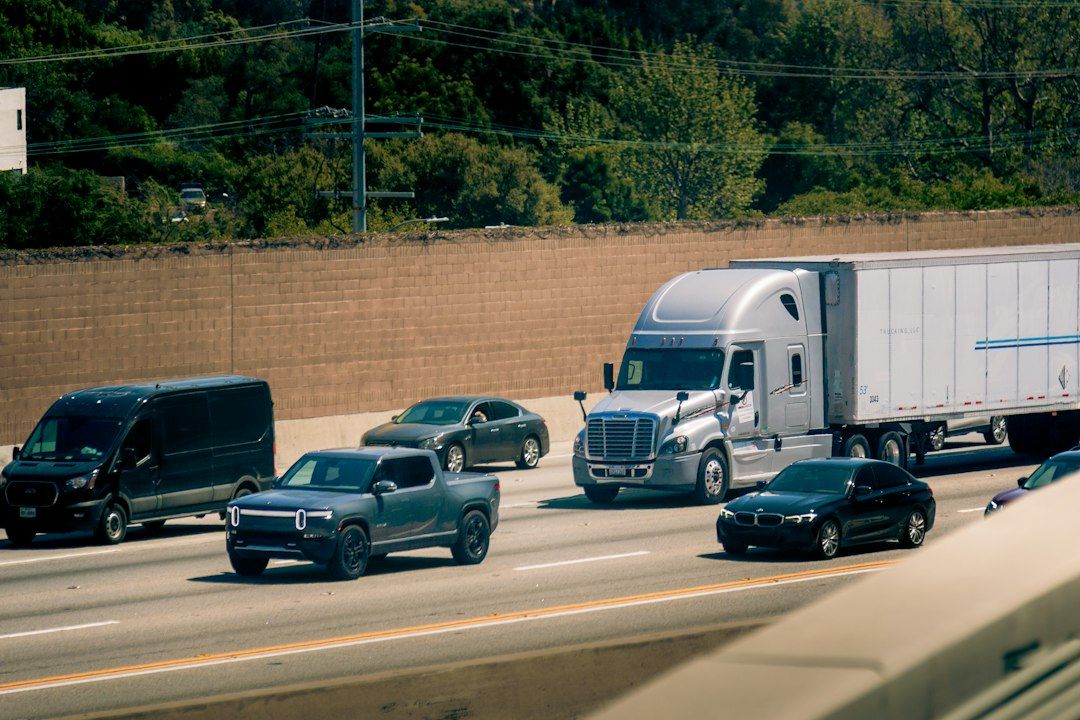
The State of California Trucking Coverage
Operating a commercial truck in California is a demanding profession. Between congested freeways, volatile fuel prices, and stringent environmental regulations, transportation professionals carry a heavy load before even hitching a trailer. Protecting that livelihood with the right insurance policy is one of the most critical decisions you will make for your business.
At Saed Albasha Agency, we understand the complexities of the transportation industry. As a family owned agency with over 20 years of experience, our mission is straightforward: Insurance made simple. Protection made certain. We know that fleet owners and independent owner operators do not have time to jump through hoops to get the coverage they need. You need a trusted advisor who customizes your policy to your specific operation, ensuring you are fully protected without paying for unnecessary extras.
The commercial trucking insurance market has seen significant shifts recently. According to 2026 industry data, the average cost of commercial truck insurance in California ranges from $8,000 to $16,000 per year for a single owner operator with a clean driving record [1]. Fleet operators often see slightly different numbers due to multi vehicle discounts, while new ventures or drivers with less than stellar records can face even higher premiums.
These costs are driven by several factors, including nuclear verdicts in commercial auto litigation, the rising cost of parts and labor for modern vehicles, and higher frequencies of cargo theft. Furthermore, insurance carriers are tightening their underwriting standards. They are looking closely at your Motor Vehicle Record, your safety scores, and the types of loads you haul. Navigating this environment requires an insurance agency that will advocate for you, explain your options clearly, and help you secure a policy that satisfies brokers, shippers, and state regulators alike.
Specialized Coverage for Different Operations
No two trucking companies are identical. A local final mile delivery service faces entirely different risks than a long haul refrigerated carrier. We focus on customizing coverage for the individual rather than trying to fit you into a prepackaged product. Here is how coverage needs vary across different segments of the industry.
Semi Trucks and Box Trucks
For standard freight carriers, the primary concerns are the immense weight of the vehicle and the value of the cargo. Whether you are running a fleet of semi trucks across state lines or operating box trucks for local deliveries, your insurance must reflect your radius of operation. Long haul truckers generally pay more for insurance due to the extended hours on the road and the exposure to varying weather and traffic conditions across different states. We help structure commercial auto policies that accurately reflect your routes, ensuring you have the necessary liability limits to satisfy the Federal Motor Carrier Safety Administration (FMCSA) and the shippers you contract with.
Dump Truck Operations
Construction and aggregate hauling present unique physical hazards. Dump trucks operate in tight construction sites, deal with uneven terrain, and haul loose materials like sand, gravel, and asphalt. A common risk involves debris flying from the bed and striking other vehicles, or the vehicle tipping during the dumping process. Securing the right dump truck insurance in California is crucial to cover these specific liability and property damage risks. This coverage is often a core component of a broader contractor insurance portfolio, protecting you whether you are on the highway or on a job site.
Towing and Recovery
Operating a wrecker service or a roadside assistance company comes with its own distinct set of challenges. When you take possession of someone else's disabled vehicle, you assume responsibility for it. Proper tow truck insurance in California requires specialized endorsements. You will need On Hook coverage, which pays for damage to a vehicle you are towing, as well as Garagekeepers Legal Liability if you hold vehicles at an impound lot or repair yard. Because tow truck drivers often work on the shoulders of busy freeways, the risk of injury and property damage is elevated, making robust liability protection absolutely essential.
Essential Policy Components You Need
Understanding the building blocks of a commercial trucking policy is the first step toward managing your costs and protecting your assets. A comprehensive policy usually includes several interlocking coverages.
Primary Auto Liability
This is the foundation of any commercial trucking policy and is required by law. It covers bodily injury and property damage you cause to others in an accident. While the FMCSA requires a minimum of $750,000 in liability coverage for general freight, most load boards and freight brokers require a minimum of $1,000,000 in coverage before they will give you a load.
Physical Damage Coverage
If your truck is damaged in an accident, stolen, or destroyed by a fire, Physical Damage coverage pays to repair or replace your equipment. This is typically broken down into Collision (striking another object or vehicle) and Comprehensive (fire, theft, vandalism, and weather events). Given the skyrocketing costs of modern commercial trucks, carrying adequate physical damage coverage is vital to getting your business back on the road quickly after a loss.
Motor Truck Cargo Insurance
Your liability insurance covers the damage you do to others, but it does not cover the freight you are hauling. Motor Truck Cargo insurance covers the shipper's goods if they are damaged or lost due to a collision, fire, or theft while in your care. Certain commodities, like electronics or refrigerated foods, require specific endorsements. For example, reefer breakdown coverage is critical if you haul temperature sensitive goods, as a mechanical failure could result in the loss of an entire load.
Non Trucking Liability and Bobtail Coverage
If you are an owner operator leased to a motor carrier, the carrier's primary liability policy usually covers you while you are under dispatch. However, you still need coverage for the times you are driving the truck for personal use or returning home empty. Non Trucking Liability covers you when you are using the truck for non business purposes, while Bobtail insurance provides liability protection when you are driving the tractor without a trailer attached, regardless of whether you are dispatched.
Workers Compensation and General Liability
If you have employees, state law mandates that you carry workers' compensation coverage to pay for medical expenses and lost wages if a driver or loader is injured on the job. Additionally, a general liability insurance policy is highly recommended. General liability covers risks outside of driving the truck, such as a slip and fall at your headquarters or accidental property damage caused during the loading and unloading process.
Navigating Southern California and Controlling Costs
Where you garage your trucks and where you drive them play a massive role in how insurance carriers calculate your premiums. Southern California is one of the busiest logistics hubs in the world. The dense traffic, complex highway systems, and proximity to major ports create a high risk environment for commercial drivers.
Securing affordable commercial truck insurance in Los Angeles requires working with an agent who understands local market dynamics. Insurance carriers evaluate risk based on garaging zip codes, meaning that truck insurance in Los Angeles, CA, will often be rated differently than coverage in a less populated region. If your operation involves drayage at the ports, finding the right commercial truck insurance in Long Beach, CA, is a specialized task. Port operators have strict requirements for access, and your insurance must align perfectly with those mandates. Similarly, if your fleet operates out of Orange County, finding tailored truck insurance in Santa Ana, CA, requires an agency that knows which carriers offer the most competitive rates for regional distribution.
If you want the best truck insurance in Los Angeles, you cannot just look at the monthly premium. You must look at the overall value, the financial strength of the carrier, and the support of your local agency. At Saed Albasha Agency, our clients love our team because we are accessible. If you need a certificate of insurance to secure a load on a Friday afternoon, we do not make you wait.
The Impact of State Regulations
California continues to lead the nation in environmental regulations, which directly impacts the trucking industry. The California Air Resources Board (CARB) has implemented strict rules, such as the Advanced Clean Fleets regulation, which mandates a gradual transition to zero emission vehicles for certain operations [2]. As fleet owners upgrade to newer, cleaner trucks to comply with these rules, the replacement value of their equipment increases. Higher equipment values inevitably lead to higher Physical Damage premiums. We help you balance these rising costs by finding discounts and structuring your deductibles strategically.
Leveraging Technology
One of the most effective ways to combat rising insurance costs is to embrace technology. Insurance carriers in 2026 are highly motivated to insure fleets that utilize telematics. Installing forward facing and driver facing dash cameras, electronic logging devices, and GPS tracking systems provides concrete data about your safety practices. Fleets that can prove they monitor hard braking, excessive speeding, and driver fatigue often qualify for significant premium discounts. By integrating these safety measures into your overall business insurance strategy, you present your company as a lower risk to underwriters.
Understanding Commercial Trucking Filings
One of the most confusing aspects of the trucking industry for new business owners is the administrative paperwork. Unlike standard auto insurance, commercial trucking requires specific filings to prove to state and federal authorities that you carry the mandated financial responsibility. Navigating these filings incorrectly can result in a suspension of your operating authority.
Here are the most common filings you will encounter:
- MCP 65: If you operate as a motor carrier strictly within the state of California, the Department of Motor Vehicles requires an active Motor Carrier Permit. The MCP 65 is the specific form your insurance company files with the DMV to prove you have the required liability insurance to hold this permit.
- Form E: This is a uniform motor carrier bodily injury and property damage liability certificate of insurance. It is filed with your home state's department of transportation to demonstrate compliance with state liability laws.
- MCS 90: This is not an insurance policy, but an endorsement attached to your primary liability policy. It is required by the FMCSA for interstate commerce and guarantees that the public is protected if your truck causes an accident, even if the specific truck was not listed on the policy or if the accident involved a violation of the policy terms.
- Form H: This filing provides proof to state regulators that you carry the required amount of Motor Truck Cargo insurance to protect the goods you are hauling. Handling these filings efficiently is part of the value we bring to our clients. We ensure that your paperwork is filed promptly and accurately with the appropriate agencies so that your trucks can stay on the road without interruption.
Partner with an Agency That Knows the Industry
Trucking is the backbone of the California economy, but it is not an easy business to run. Managing fuel costs, vehicle maintenance, driver retention, and regulatory compliance takes up enough of your time. You should not have to struggle to understand your insurance policy or fight to get a response from your agent when you need help.
You need a partner who understands the difference between bobtailing and deadheading, who knows why your cargo limits matter to a freight broker, and who can explain how a minor accident impacts your CSA scores. At Saed Albasha Agency, we shield transportation entrepreneurs from the unexpected. We believe in building long term relationships based on trust, transparency, and reliable service.
Whether you are a seasoned fleet manager looking to restructure your commercial auto program or a newly minted owner operator securing your first policy, we take the time to review your operations comprehensively. We will identify gaps in your current coverage, eliminate redundancies, and negotiate with top rated carriers to secure a program that protects your business today and scales with you tomorrow.
Reach Out to Saed Albasha Agency
If you want coverage that actually fits your home, car, business, or life—not a one-size-fits-all policy—reach out to Saed Albasha Agency today for a personalized review. Call or message our Glendora, CA team now and let us make your insurance portfolio simpler, clearer, and easier to manage anywhere in California. Start by visiting our quote request page to connect with our dedicated professionals and secure the specialized protection your trucking operation deserves.
By Saed Albasha & Team · Published 7/16/2026